
House Washing in River Ridge, Louisiana: A Homeowner Guide
House washing in River Ridge, Louisiana clears green algae, pollen and organic streaks from siding shaded by mature tree cover. The work uses a gentle rinse matched to each surface so growth lifts without driving water behind the walls. This guide covers what the service includes and how a homeowner should approach it.
By Cooper Catalanotto. Last updated September 14, 2026.
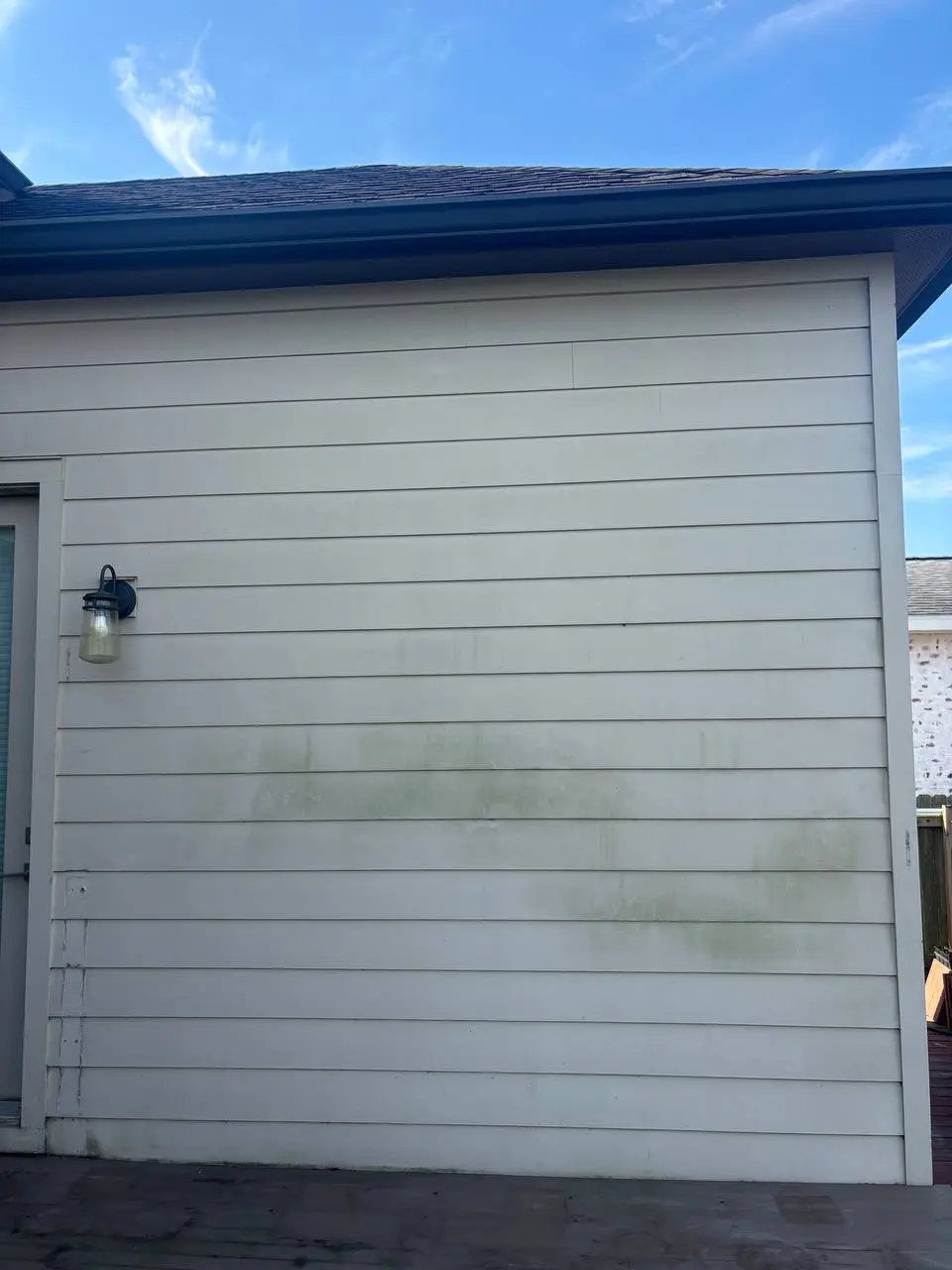
What grows on River Ridge siding
River Ridge is known for its mature tree canopy, and that canopy is the single biggest factor in what grows on a home exterior. The shade cast by live oaks and other mature trees keeps the north and sheltered sides of a home damp longer than the sun-facing walls, and that moisture is what algae and mildew need to hold. Green algae shows up first on those shaded faces, often as a thin film that darkens over weeks. Pollen settles across every face in the spring, and it sticks to damp siding because the moisture gives it something to bond to. Dark streaks running under the roof edges are a separate issue: they form where gutter overflow runs down the same path every time, carrying tannins and organic matter that stain the finish. None of this means the siding is failing. It means the environment is doing what a humid, shaded climate does, and house washing is the regular maintenance that keeps it in check. Understanding what is growing, and why, is the first step in deciding what kind of washing the home needs and how soon it should happen.
How house washing differs from pressure washing
The terms get used interchangeably, but they describe different methods. Pressure washing drives water at a surface with enough force to strip material, and that force is what makes it effective on concrete but risky on siding. House washing, as the term is used in the trade, uses a lower-pressure rinse, often combined with a cleaning solution that does the lifting. The goal is to let the chemistry and the dwell time break the bond between the growth and the surface, then rinse it away with a gentle stream. On vinyl, wood and painted siding, that approach clears algae and grime without etching the finish or forcing water behind the walls. High pressure in the wrong place, by contrast, can cut a line through paint, drive water behind vinyl where it sits against the sheathing, or leave streaks where the nozzle was held too close. The distinction matters most on older homes, where the finish is thinner and the siding may have small gaps or cracks that a hard stream would exploit. A homeowner asking about method is asking the right question, because the answer determines whether the wash clears the siding or damages it.
Which surfaces can be washed safely
House washing covers the broad exterior surfaces that face the weather: vinyl siding, wood siding, painted trim, aluminum fascia, soffits, window frames and the exterior faces of gutters. Each of these takes a gentle rinse, but each has its own tolerance. Vinyl is the most forgiving and can take a broader spray pattern. Painted trim is thinner and needs more care, because a cut through the paint exposes bare wood. Wood siding needs attention to the grain direction and to any checks or splits where water could enter. Aluminum fascia and soffits are soft and can dent or streak if the stream is too narrow. Brick and stucco can be washed, but they behave differently: brick is porous and holds growth in the mortar joints, while stucco can be soft or cracked and needs the lowest setting. Surfaces that should not be included in a house wash are the roof, the deck or patio surface, and any electrical fixtures. A homeowner should expect the scope to be settled in a walk-through before the work starts, so there is no question about what gets washed and what does not. The walk-through is also where fragile trim under the tree cover gets identified and flagged for the softer approach.
How often a home under tree cover needs washing
There is no fixed schedule that fits every home, because the rate of growth depends on the canopy, the shade pattern and how much moisture sits against the siding. A home under heavy tree cover in River Ridge will show algae on the shaded sides sooner than a home on an open lot, and the spring pollen season adds a layer across every face. A common approach is to wash once a year, with the shaded sides checked first, and to move the wash earlier if the green growth is visible from the curb. Some homeowners wait until the streaks are dark and the algae is thick, and the work still clears it, but the siding spends more time under growth than it needs to. The question to ask is not how often a calendar says to wash, but how fast the growth is returning on the shaded faces. A walk-through answers that, and it gives the homeowner a read on whether the next wash can wait or whether the growth is already past the point where a gentle rinse will clear it easily. The canopy sets the pace, and the siding shows when the pace has been exceeded.
What to do before and after the wash
A few steps on the homeowner side make the wash cleaner and safer. Before the crew arrives, close the windows, move items away from the walls where they can be moved, and cover or move potted plants that sit against the siding. Electrical outlets on the exterior should be noted, and any pet doors or vents should be pointed out so the crew can route around them. If the home has a rain barrel or a cistern collecting from the downspouts, it should be disconnected or diverted before the wash, because the rinse water carries the cleaning solution and the growth it lifted. After the wash, the siding should be given time to dry before anything is put back against it, because damp siding will hold whatever rests on it. The gutters and downspouts should be checked, because a wash that clears the exterior faces does not clear the interior, and a clogged downspout will send the next overflow back down the same path that caused the streaks. These steps are small, but they keep the wash from being undone by something avoidable, and they protect the plants and the fixtures that sit closest to the walls.
What house washing does not include
House washing is an exterior surface clean, and it helps to know where the line sits. It does not include roof cleaning, which is a separate service with its own method and its own safety considerations. It does not include deck restoration or sealing, because wood decks need a different approach and often need sanding or staining after cleaning. It does not include repairs to damaged siding, trim or fascia, because washing does not fix rot, cracks or loose boards, and a wash over damaged material can drive water into the gaps. It does not include window cleaning inside the tracks, because the rinse clears the exterior glass and frames but does not detail the interior. It does not include sealing or coating the siding, because that is a separate step with its own products and curing time. A homeowner who expects the wash to fix a streak caused by a gutter leak will be disappointed, because the streak will return if the gutter keeps overflowing. Knowing what the service does and does not cover keeps the expectations clear and the result honest, and it lets the homeowner plan the other work the home may need alongside the wash.
Choosing the right approach for shaded homes
A home under heavy tree cover in River Ridge needs a slightly different approach than a home on an open lot, and the difference is in the frequency and the attention to the shaded faces. The north and sheltered sides will always be the first to show growth, and they are the faces that determine when the next wash is due. The walk-through is where that gets read, because the growth on the shaded side tells the homeowner more about the schedule than any calendar. The cleaning solution and the rinse are the same across the home, but the shaded faces may need a longer dwell time to break the heavier growth before the rinse. A homeowner who understands this can ask the right questions: what is growing on the shaded walls, how fast it is returning, and whether the next wash can wait. The answer is not a sales pitch, it is a read of the siding, and it gives the homeowner a way to plan the work around what the home actually needs rather than a fixed interval. The tree cover sets the conditions, and the siding shows the results.
Keep reading
Read the house washing page for the method and the deliverables, or the River Ridge area page for how the seasons and the property type shape the work there. Related reading: Soft Washing in Kenner, Louisiana: A Homeowner Guide and Gutter Cleaning in Lakeview, Louisiana: A Homeowner Guide. Or see the project gallery for before and after photographs of finished work.