Driveway Cleaning in Metairie, Louisiana: A Homeowner Guide
Driveway cleaning in Metairie, Louisiana clears oil stains, algae, tire marks and organic buildup from concrete driveways on flat, established lots where shade and standing water keep growth holding on the surface. This guide covers what the work includes and how a homeowner should plan it.
By Cooper Catalanotto. Last updated September 14, 2026.
What collects on a Metairie driveway
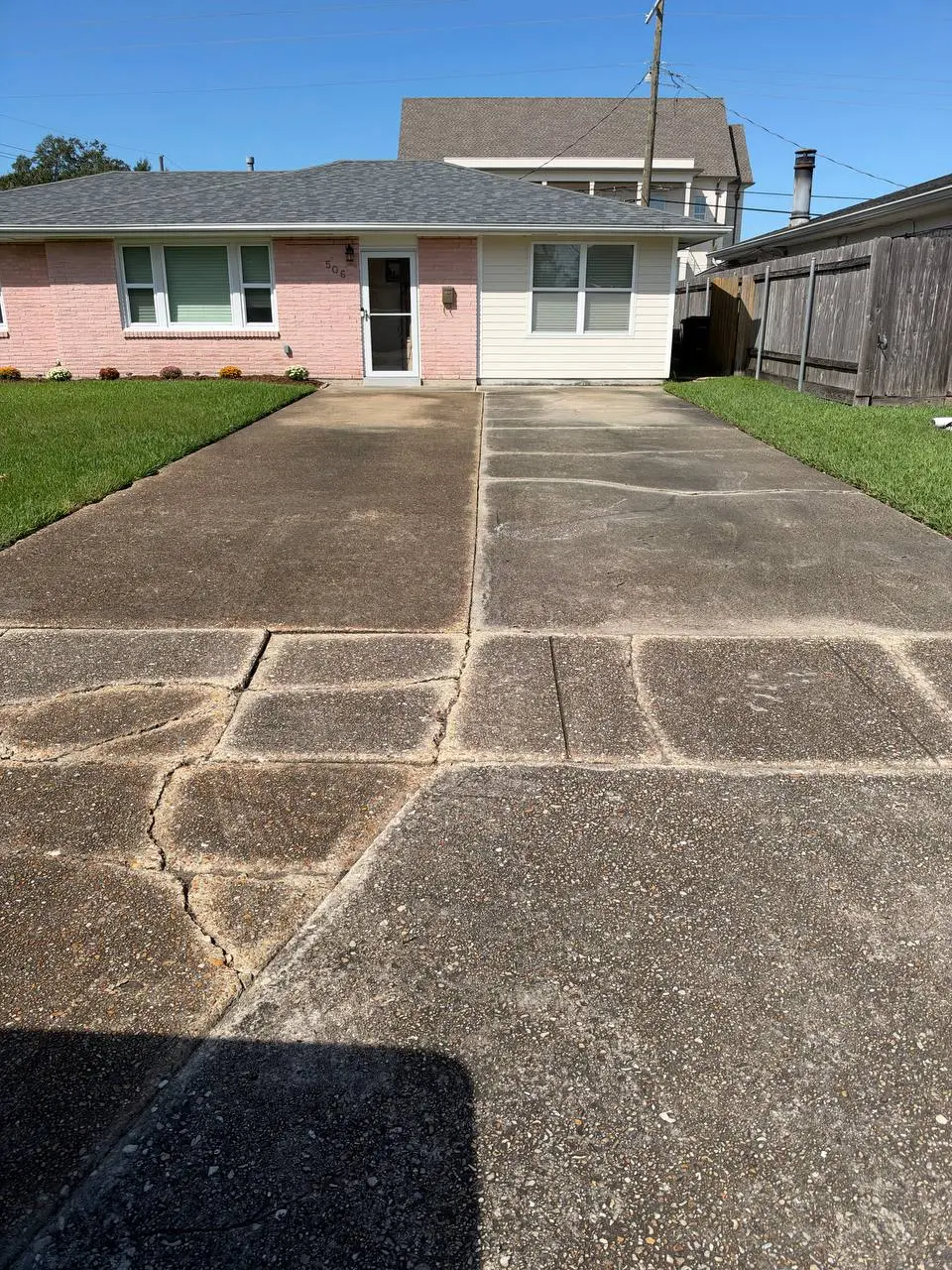
A driveway in Metairie collects a mix of organic and inorganic matter over a year. Leaves and debris from the live oaks that line the older streets drop onto the surface and sit there, especially on the shaded sections where the canopy is thick. Rain carries silt and organic matter across the concrete, and on a flat lot the water stands long enough to leave a film behind. Algae and mildew take hold in the damp sections, often on the north-facing side or the section under a tree, and they show as a green or dark film that darkens over months. Oil drips from parked cars leave dark spots that sink into the porous surface, and tire marks leave black streaks at the turn points. Rust from metal furniture, planters or tools left on the concrete leaves orange stains that bond with the surface. None of this means the driveway is failing, it means the surface is doing what an outdoor concrete slab does in a humid, shaded climate. Driveway cleaning is the maintenance that clears it, and understanding what is on the surface is the first step in deciding what kind of cleaning the driveway needs.
Why concrete needs a different approach than siding
Concrete is a hard, porous surface, and that combination is what makes it durable and what makes it hold stains. Unlike siding, which is vertical and sheds most of what lands on it, a driveway is flat, so water, oil and debris sit on it and sink in. The porosity is what lets oil and rust bond with the surface, and it is what makes a simple rinse insufficient. Pressure washing is the method that fits concrete, because the force is what lifts the embedded grime and the stains from the pores. A gentle rinse, the kind used on siding, would leave the embedded material behind. The pressure is matched to the surface, not applied at full force everywhere, because concrete can be etched if the nozzle is held too close or the stream is too narrow. The approach is to use enough pressure to lift the grime and the stains without etching the surface, and the crew reads the concrete and adjusts as they go. A homeowner who asks about the pressure is asking a fair question, because the answer determines whether the wash clears the driveway or marks it.
How oil stains are treated
Oil stains are the most stubborn thing on a concrete driveway, because the oil sinks into the pores and bonds with the surface. A pressure wash alone may lift the surface layer, but the stain that has set into the concrete often needs a degreaser to break it before the rinse. The degreaser is applied to the stain, given time to break the oil, and then the pressure wash lifts it from the pores. Fresh oil stains, the kind that are still dark and wet, lift more easily than old stains that have cured and sunk deep. A stain that has been on the concrete for months or years may lighten but not disappear, because the oil has bonded with the surface past the point where a cleaner can reach it. A homeowner who expects every oil stain to vanish should know that the age and the depth of the stain set the result, and a walk-through shows which stains will lift and which will only fade. The degreaser and the pressure wash are the right tools, but the concrete has the final say, and an honest read of the stain sets the expectation before the work starts.
What algae and organic growth do to concrete
Algae and organic growth on a concrete driveway are more than a cosmetic issue. The green or dark film that forms on the shaded sections is alive, and it holds moisture against the surface, which speeds up the wear of the concrete over time. The growth is also slippery when wet, which is a safety issue on a surface that gets foot traffic and tire traffic. On a flat lot in Metairie, where water stands after rain, the shaded sections stay damp long enough for the algae to root into the pores of the concrete. Pressure washing lifts the growth and clears the film, and the surface reads clean and rough again, which is the texture that gives traction. The growth will return if the shade and the moisture stay the same, but a wash clears it before it sets deep and before it makes the surface slippery. A homeowner who sees a green film on the shaded section should know that it is not just a stain, it is a living growth that is holding water against the concrete, and clearing it is both a cleaning step and a maintenance step that keeps the surface safe and sound.
How often a driveway should be cleaned
The frequency of driveway cleaning depends on the shade, the tree cover and how much organic matter drops on the surface. A driveway under heavy tree cover in Metairie will show algae on the shaded sections sooner than a driveway on an open lot, and the live oaks that line the older streets drop leaves and debris through the year. A common approach is to clean once a year, with the shaded sections checked first, and to move the clean earlier if the green film is visible or if the surface is slippery when wet. Some homeowners wait until the stains are dark and the algae is thick, and the pressure wash still clears it, but the concrete spends more time under growth and oil than it needs to. The question is not how often a calendar says to clean, but how fast the grime and the growth are returning. A walk-through after a rain shows where the water sits and where the algae is holding, and that is the read that tells the homeowner whether the next clean can wait or whether the growth is already past the point where a wash will clear it easily.
What driveway cleaning does not include
Driveway cleaning is a surface clean, and it helps to know where the line sits. It does not include sealing or coating the concrete, because that is a separate step with its own products and curing time, and a freshly cleaned driveway is the right surface to seal but the sealing is a separate service. It does not include repairs to cracks or spalling, because washing does not fix structural damage, and a wash over cracked concrete can drive water into the cracks. It does not include cleaning the expansion joints or the edges in a way that repairs them, because the joints are part of the structure and the wash clears them but does not re-level them. It does not include landscaping work, because the wash clears the surface but does not trim the trees or the bushes that drop debris on it. A homeowner who expects the wash to fix a crack or to seal the surface will need to plan those as separate steps, and a wash that clears the grime is the right first step before sealing or repairing. Knowing what the service does and does not cover keeps the expectations clear.
Protecting the surrounding surfaces during the wash
A driveway wash sends water, grime and cleaning solution off the surface, and where that water goes matters. The crew should route the runoff away from landscaping, because the pressure and the cleaner can damage plants that sit along the driveway edges. The downspouts that discharge onto the driveway should be noted, because a wash that clears the surface will be undone if the downspout keeps dumping water and debris on it. The garage floor and the entry walk should be considered, because the wash may push grime toward them, and the crew should work in a direction that moves the runoff off the property or into a drain. If the driveway connects to a street drain, the runoff should be directed there, and if it does not, the crew should contain the runoff or work in sections to keep it from flooding a neighbor property. A homeowner who points out the downspouts, the drains and the plantings before the wash helps the crew work in the right direction and protect the right things. These steps are small, but they keep the wash from causing a problem while it solves one.
Keep reading
Read the driveway cleaning page for the method and the deliverables, or the Metairie area page for how the seasons and the property type shape the work there. Related reading: Sidewalk Cleaning in New Orleans, Louisiana: A Homeowner Guide and Soft Washing in Kenner, Louisiana: A Homeowner Guide. Or see the project gallery for before and after photographs of finished work.